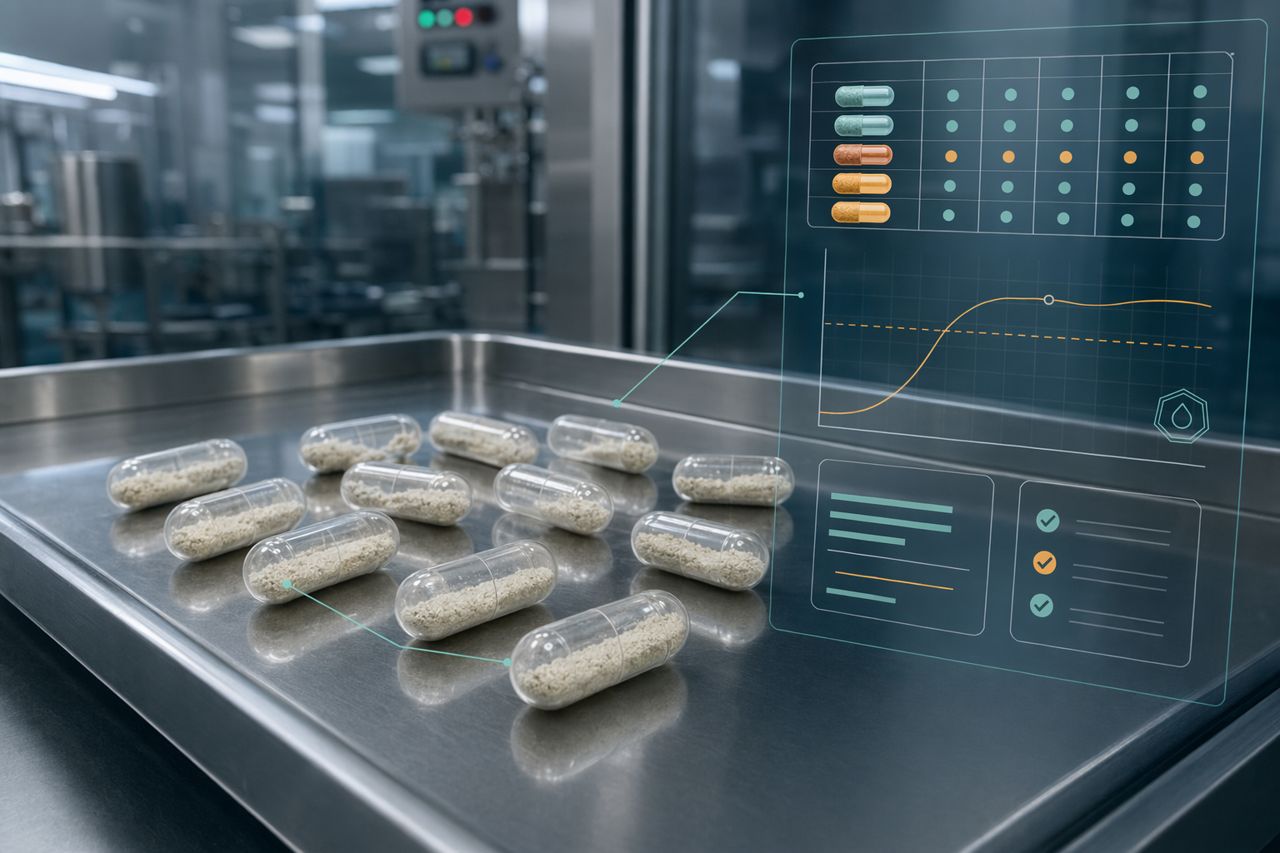
Private-Label Digestive Enzyme Formula Ingredient Guide
For supplement manufacturers, a digestive enzyme product is not just a list of enzyme names. It is a formulation system: enzyme selection, dosage format, excipient compatibility, sourcing consistency, documentation, and commercial scale-up all need to work together.
Enzymeslink supports contract manufacturers, private-label teams, brand owners and distributors sourcing digestive enzymes and custom enzyme premixes. We help translate product positioning into manufacturable capsule, tablet, powder, or blend specifications without overcomplicating the production path.
Request a quote for a private-label digestive enzyme formula or bulk enzyme ingredient supply.
From label concept to manufacturable enzyme blend
Digestive enzyme formulas often begin with a commercial brief such as:
- Broad-spectrum digestive support
- Protein-focused formulas
- Dairy-focused formulas
- Carbohydrate and fiber support
- Plant-based or vegan digestive formulas
- Premium multi-enzyme complexes for capsules or tablets
- Custom enzyme premixes for private-label supplement lines
The technical challenge is converting that concept into a stable, production-ready ingredient system. Enzymes vary in substrate focus, pH behavior, powder handling, moisture sensitivity, and compatibility with other active and inactive ingredients. Enzymeslink helps define those parameters early so your formula can move efficiently through quoting, sampling, pilot production, and full-scale manufacturing.
Common enzyme categories used in digestive supplement formulas
A private-label digestive enzyme formula may include one or more enzyme classes depending on the product positioning and label architecture.
Protease
Protease is commonly used in formulas positioned around protein digestion. It is often paired with amylase and lipase in broad-spectrum blends. Formulators should consider pH profile, compatibility with other enzymes, and how the ingredient behaves in capsule or tablet processing.
Amylase
Amylase is used in formulas focused on starch and carbohydrate breakdown. It is frequently included in everyday digestive enzyme complexes and can be blended into capsules, tablets, or powder formats.
Lipase
Lipase supports fat-focused positioning and is often included in premium digestive blends. Because lipase can be sensitive to certain processing conditions, it should be evaluated for the intended dosage form and excipient system.
Lactase
Lactase is used in dairy-focused digestive formulas. For private-label products, lactase selection should align with positioning, serving format, and label communication while avoiding unsupported claims.
Cellulase and hemicellulase
Cellulase and hemicellulase are frequently used in plant-forward digestive enzyme blends. They are relevant when a formula is designed around fiber, plant foods, or broad-spectrum digestion positioning.
Alpha-galactosidase
Alpha-galactosidase is often selected for formulas associated with legumes and certain complex carbohydrates. It can be used as a targeted ingredient or as part of a wider enzyme blend.
Bromelain and papain
Bromelain and papain are plant-derived proteolytic enzymes that may support clean-label or botanical-adjacent positioning. Their source story, allergen considerations, and processing compatibility should be reviewed before final specification.
Key formulation decisions for supplement manufacturers
1. Dosage format
Digestive enzyme ingredients can be developed for several finished formats:
- Hard capsules
- Tablets
- Chewable tablets
- Sachets or stick packs
- Powder blends
- Custom premixes for downstream manufacturing
Capsules are often preferred for multi-enzyme systems because they can simplify processing and reduce compression stress. Tablets can be commercially attractive but require closer review of compression force, excipient selection, and stability. Powders and stick packs require attention to taste, dispersibility, moisture control, and serving-size expectations.
2. Blend compatibility
A strong enzyme formula is not built by adding as many ingredients as possible. It requires practical compatibility review. Enzymeslink evaluates:
- Enzyme-to-enzyme compatibility
- Moisture exposure risk
- Mineral and acid-base interactions
- Botanical extract compatibility
- Probiotic, prebiotic, or postbiotic adjacency
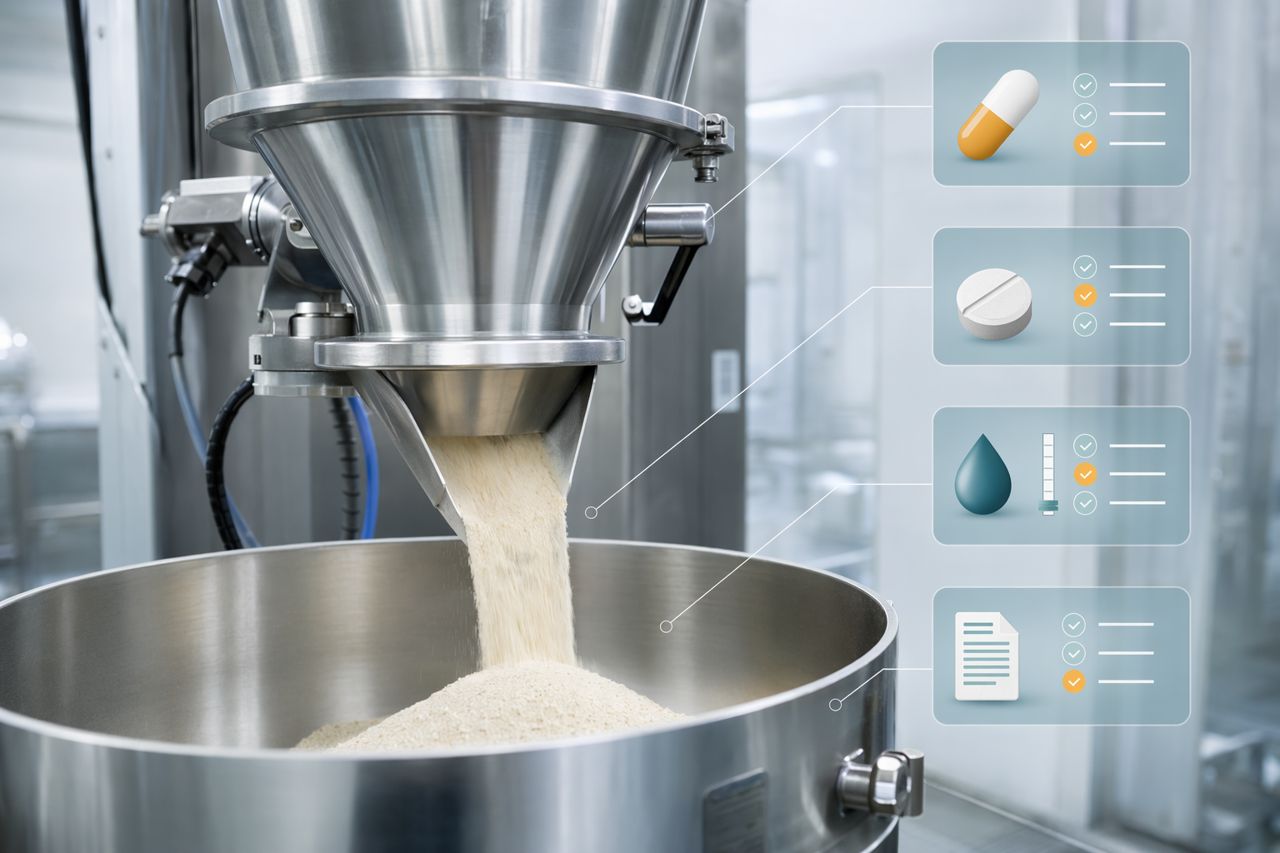
- Flow behavior in blending and filling equipment
- Finished-product format constraints
This helps reduce reformulation loops and avoid late-stage manufacturing problems.
3. Label architecture
Digestive enzyme products must be technically sound and commercially clear. We help formulation teams organize enzyme classes in a way that fits the intended positioning, such as protein, carbohydrate, fat, dairy, fiber, or broad-spectrum support.
Enzymeslink does not build formulas around exaggerated wellness claims. We support documentation-ready ingredient structures that fit responsible supplement positioning and practical manufacturing requirements.
4. Sourcing consistency
For repeat production, ingredient continuity matters. Manufacturers need enzyme inputs that are consistent across purchase orders, supported by documentation, and suitable for the intended market. Enzymeslink can support sourcing specifications related to:
- Ingredient identity
- Origin expectations
- Vegan or vegetarian suitability
- Non-GMO positioning
- Allergen statements
- Carrier and excipient profile
- Batch traceability
- Shelf-life and storage conditions
Documentation support for private-label programs
Supplement manufacturers often need more than a price per kilogram. They need ingredient documentation that supports internal quality review, customer onboarding, and finished-product recordkeeping.
Available documentation may include:
- Certificate of analysis
- Specification sheet
- Safety data sheet where applicable
- Allergen statement
- Non-GMO statement where applicable
- Vegan or vegetarian statement where applicable
- Country or region of origin information
- Ingredient composition details
- Storage and handling guidance
- Lot traceability documentation
Documentation needs can vary by market, customer requirements, and finished-product positioning. Enzymeslink helps align the ingredient package with the commercial and quality expectations of your project.
Scale-up considerations before purchase
Before moving from sample to production order, manufacturers should confirm several practical details:
- Target dosage format and serving structure
- Capsule size or tablet weight constraints
- Expected excipient system
- Required flow characteristics
- Moisture protection strategy
- Packaging format and desiccant plan
- Label positioning and ingredient naming
- Forecast volume and reorder cadence
- Required documentation package
Addressing these points early helps create a cleaner quote, a better matched ingredient recommendation, and a smoother manufacturing path.
Custom digestive enzyme premixes
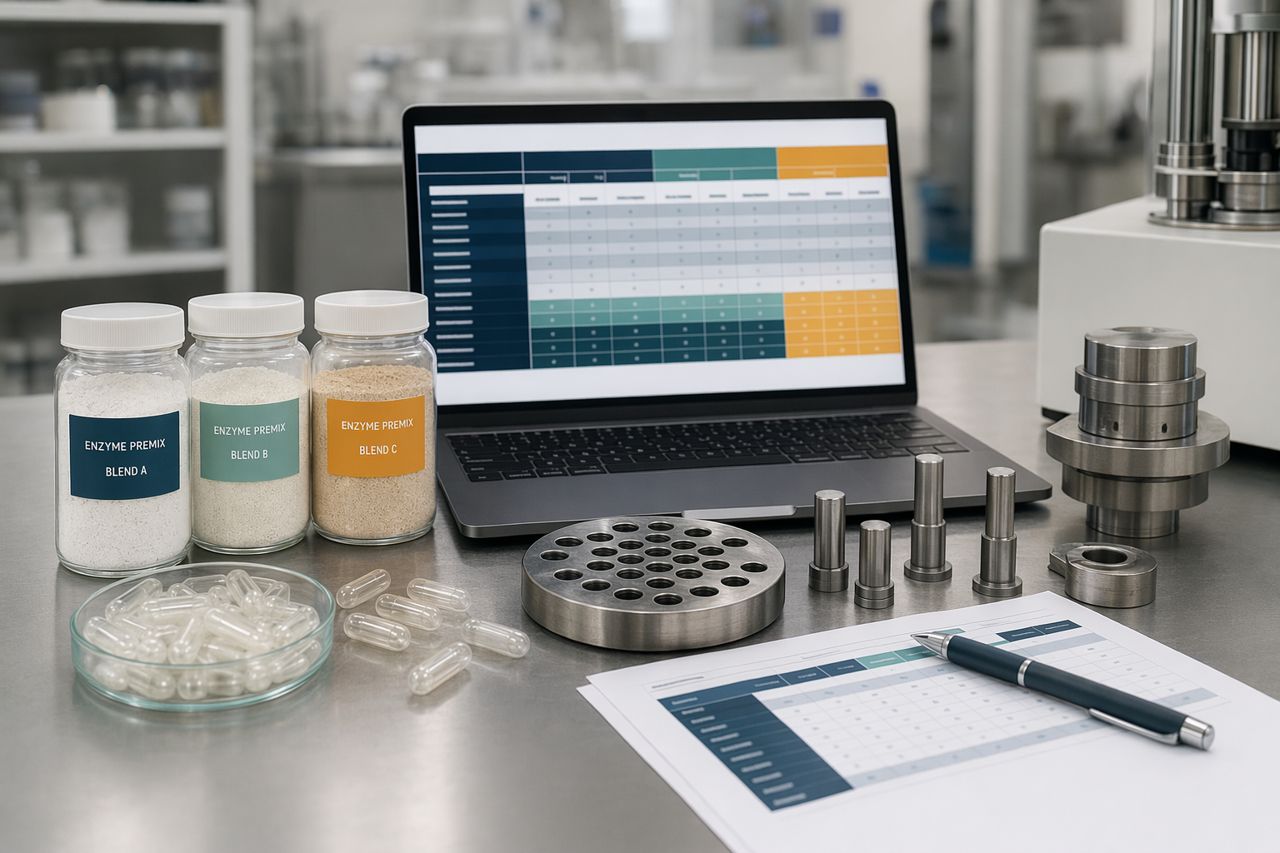
For contract manufacturers and private-label programs, a custom premix can simplify production. Instead of sourcing multiple individual enzyme inputs, a premix can consolidate the enzyme system into a single controlled blend designed for the target formula.
A custom premix may help with:
- Purchasing efficiency
- Reduced weighing complexity
- More consistent batch execution
- Cleaner production documentation
- Easier formula transfer between pilot and commercial scale
- Reduced risk of ingredient omission during manufacturing
Enzymeslink can review whether a premix or individual bulk enzyme supply is the better fit for your production model.
What to include in your quote request
To receive a focused quote, share as much of the following as possible:
- Desired product type: capsule, tablet, powder, stick pack, or premix
- Target enzyme categories or reference formula
- Label positioning and market channel
- Vegan, non-GMO, allergen, or origin requirements
- Expected order volume or launch forecast
- Packaging plan if known
- Required documentation package
- Timeline for sampling and production
If your formula is still in development, that is acceptable. Enzymeslink can help define the ingredient structure before quoting final production quantities.
Request a quote
Ready to build a private-label digestive enzyme formula or source bulk digestive enzymes for supplement manufacturing?
Use the on-site request a quote form and send your project brief: the product, the quantity, the destination, the target format and the documents you need. Enzymeslink will review the formulation goals and expected volume so we can recommend a practical supply path. Pack size, price and lead time are quoted per order.