Tablet vs Capsule Digestive Enzyme Supplements: Manufacturing Trade-Offs for Private-Label Brands
For private-label digestive enzyme products, the dosage format is not just a marketing choice. Tablets and capsules expose enzyme blends to different manufacturing stresses, excipient systems, moisture profiles, and scale-up constraints.
Enzymeslink supports dietary supplement manufacturers sourcing bulk digestive enzymes for supplement manufacturers with format-aware blend development, documentation review, and practical production guidance. The right decision depends on the enzyme system, label positioning, serving size, target consumer experience, and the realities of your contract manufacturing line.
The short answer: capsules protect flexibility; tablets protect format efficiency
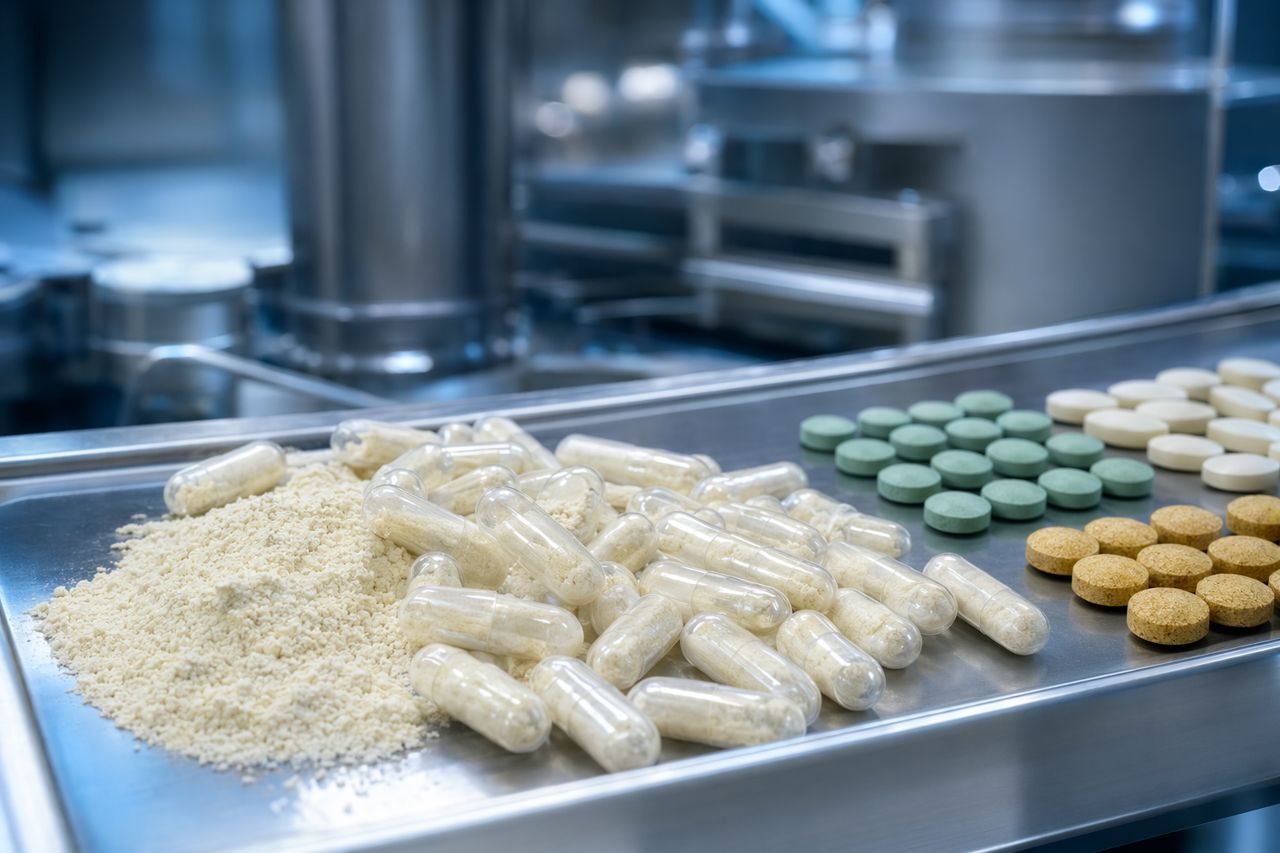
Capsules are often favored when the formulation requires a multi-enzyme blend, faster development, clean-label excipient strategy, or lower exposure to compression stress. Tablets can be attractive when the brand needs a compact format, lower per-count packaging volume, chewable positioning, or a familiar shelf presentation.
Neither format is universally better. The stronger choice is the one that protects enzyme performance through blending, filling or compression, packaging, transit, and shelf life.
Capsule digestive enzymes: where they work well
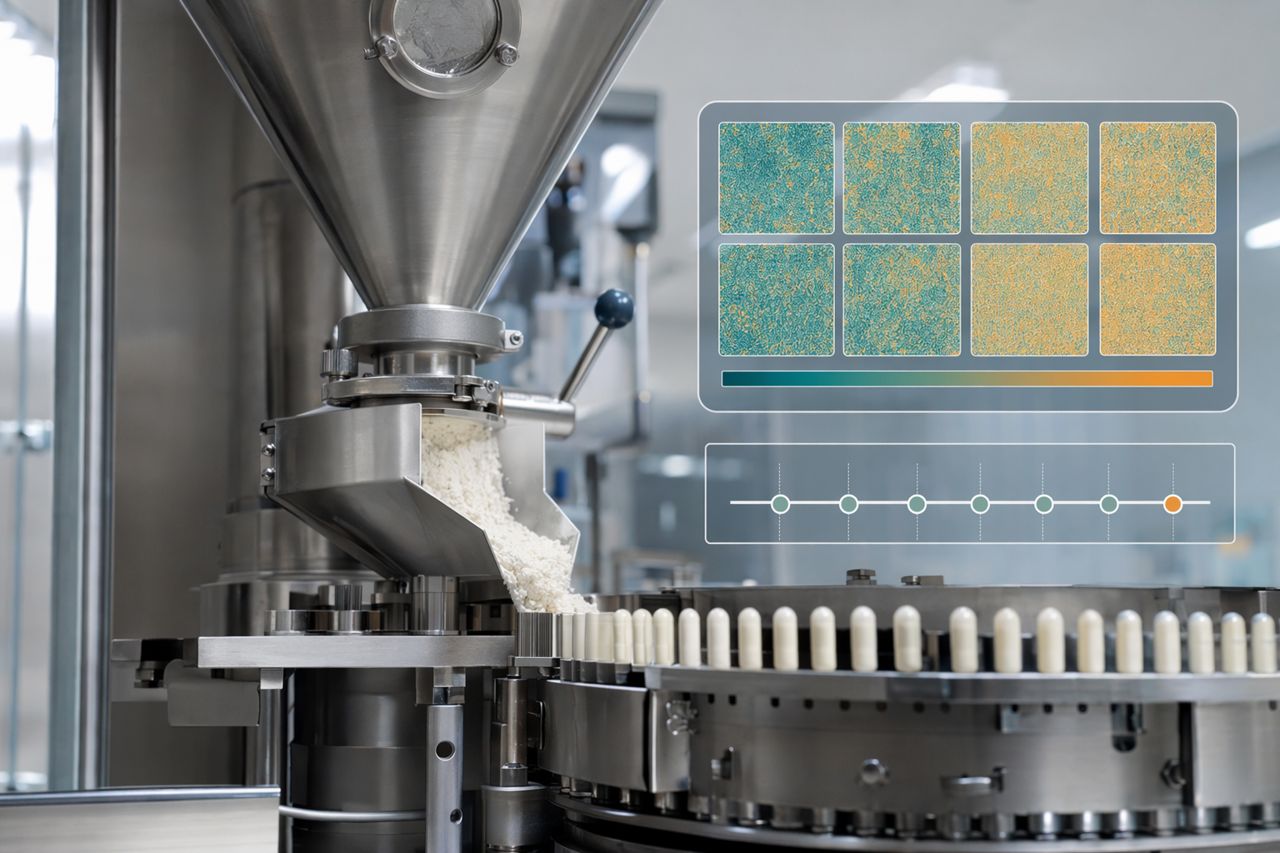
Capsules are typically the most straightforward format for private-label digestive enzyme launches because the process is closer to powder handling than tableting. The blend is mixed, tested against specification, and filled into hard capsules with limited mechanical stress compared with compression.
Manufacturing advantages of capsules
- Lower compression exposure: Enzyme proteins can be sensitive to aggressive processing. Capsules avoid the pressure profile of tablet compression.
- Blend flexibility: Proteases, amylases, lipases, cellulases, lactase, alpha-galactosidase, and specialty enzyme systems can be combined with fewer tableting constraints.
- Cleaner excipient approach: Capsule fills may require flow aids or carriers, but usually fewer binders, disintegrants, and compression-focused excipients than tablets.
- Faster pilot-to-commercial transition: Once flow, density, and fill weight are controlled, capsule scale-up is often direct.
- Format segmentation: Vegetarian capsules, delayed-release capsules, and size selection allow brands to tailor consumer experience and label presentation.
Capsule limitations to plan for
Capsules still require disciplined formulation work. Low-density enzyme powders can create fill-weight limitations, and hygroscopic ingredients may affect powder flow or shell compatibility. If the serving requires a high enzyme load plus botanicals, minerals, or probiotic co-ingredients, capsule count may increase.
Key capsule questions for formulation teams:
- Will the target serving fit into the desired capsule size?
- Does the blend maintain flow during extended filling runs?
- Are the enzymes compatible with capsule shell moisture and packaging conditions?
- Is the desired capsule material aligned with vegetarian, halal, kosher, or allergen expectations?
- Can the manufacturer maintain blend uniformity from pilot batch to full batch?
Tablet digestive enzymes: where they work well
Tablets can provide a compact, familiar dosage form and may reduce packaging volume per serving. They also support chewable concepts, scored tablets, and certain coating strategies. However, tablets require tighter formulation engineering because digestive enzymes must survive blending, granulation if used, compression, and any coating or drying steps.
Manufacturing advantages of tablets
- Compact presentation: Tablets can deliver a dense format when the formulation compresses well.
- Consumer familiarity: Tablets are common in supplement aisles and can support chewable or swallowable positioning.
- Coating options: Film coating may improve appearance, odor masking, swallowability, and handling.
- Packaging efficiency: Tablets may reduce bottle size or blister footprint depending on dose and count.
Tablet limitations to plan for
Digestive enzyme tablets can be more challenging because enzymes may be affected by moisture, heat, shear, and compression. Tablet hardness targets must be balanced against disintegration behavior and ingredient sensitivity. More excipients may be needed, which can dilute the active blend and increase tablet size.
Key tablet questions for formulation teams:
- Can the enzyme blend tolerate compression without unacceptable potency loss?
- Does the formula require wet processing, and if so, how is moisture exposure controlled?
- Are binders, fillers, lubricants, and coatings compatible with the enzyme system?
- Will the tablet disintegrate appropriately for the intended use case?
- Can hardness, friability, appearance, and potency specifications be maintained at scale?
Formulation factors that should drive the decision
1. Enzyme blend complexity
Multi-enzyme systems often behave as mixed-powder formulations with different particle sizes, densities, and moisture sensitivities. Capsules generally allow more modular blend construction. Tablets may require deeper excipient screening to achieve compressibility without compromising the enzyme profile.
If the formula includes enzymes plus probiotics, botanicals, minerals, acids, or flavor systems, compatibility work becomes even more important. Co-ingredients can change pH microenvironments, moisture uptake, and flow behavior.
2. Dose size and serving design
A capsule strategy may require two capsules per serving when the desired enzyme load is high. A tablet strategy may fit the same serving into fewer units, but only if the blend compresses well and does not need excessive excipient support.
For premium private-label brands, serving design should be decided early. A smaller serving can improve consumer adoption, but not if it creates manufacturing risk or forces weak formulation compromises.
3. Processing stress
Capsule filling is generally lower-stress than tablet compression. Tablet manufacturing can introduce pressure, friction, and heat at contact points. Coating and drying may add additional exposure. This does not eliminate tablets as an option, but it means tablet digestive enzymes should be validated with the actual processing pathway in mind.
4. Moisture management
Digestive enzyme blends often require careful moisture control. Capsules introduce shell-related moisture considerations, while tablets can introduce moisture through excipients, granulation, or coating systems. Packaging selection, desiccant strategy, headspace, and storage instructions should be considered part of the formulation architecture, not an afterthought.
5. Disintegration and consumer experience
Capsules usually open after ingestion and release powder without requiring tablet breakup. Tablets must be engineered to disintegrate while still maintaining physical integrity in the bottle. Chewable tablets add taste, texture, aroma, and flavor-masking challenges, especially with protease-heavy blends that can produce noticeable sensory effects.
6. Documentation and compliance readiness
B2B buyers should evaluate more than an ingredient quote. For digestive enzyme manufacturing, request documentation that supports identity, composition, allergen review, country-of-origin expectations, non-GMO or vegan requirements where applicable, and lot-to-lot consistency.
Enzymeslink can support formulation managers with specification alignment, ingredient documentation, and practical sourcing conversations before production assumptions become expensive change orders.
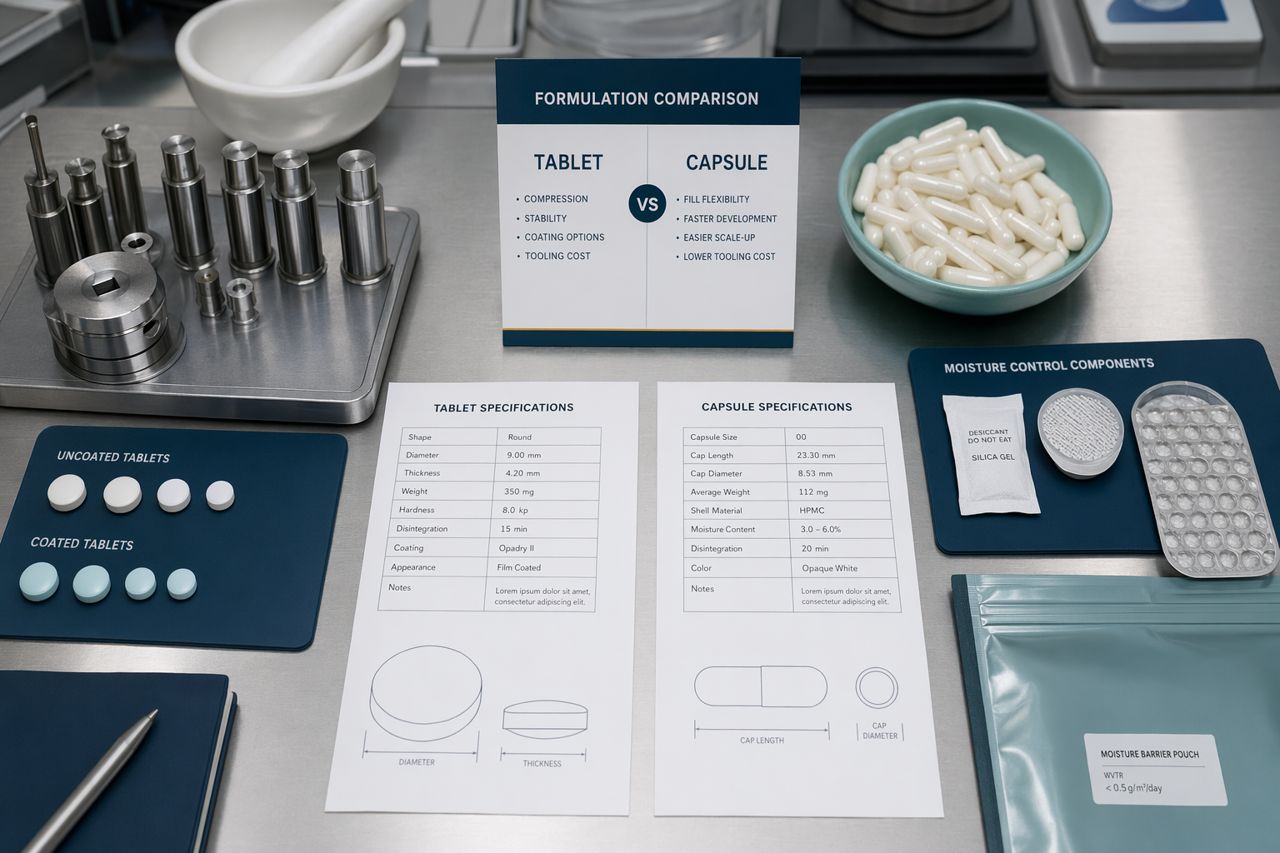
Tablet vs capsule comparison for private-label planning
| Decision factor | Capsules | Tablets |
|---|---|---|
| Development speed | Often faster for powder blends | Often longer due to compression trials |
| Processing stress | Lower mechanical stress | Higher compression and possible coating stress |
| Excipient load | Typically lower | Often higher for binding, flow, and disintegration |
| Serving size flexibility | May increase capsule count | May achieve denser unit format |
| Sensory profile | Less taste exposure before swallowing | Chewables require flavor masking |
| Packaging impact | Capsule size affects bottle count | Tablets may support tighter packaging |
| Scale-up risk | Flow and fill-weight control are central | Compression, hardness, friability, and disintegration add variables |
| Best fit | Complex enzyme blends, cleaner excipient systems, faster launch paths | Compact formats, chewables, coated presentations, dense tablets |
When to choose capsules
Choose capsules when your private-label brand prioritizes:
- A broad digestive enzyme blend
- Minimal excipient complexity
- Vegetarian capsule positioning
- Lower processing stress
- Faster product development
- Flexible serving architecture
- Premium clinical-style presentation
Capsules are especially practical for brands launching a first digestive enzyme product or expanding an existing line with multiple enzyme combinations.
When to choose tablets
Choose tablets when your brand prioritizes:
- Compact dosage format
- Chewable or flavored positioning
- Coated appearance or swallowability
- Packaging density
- Familiar supplement shelf format
- A formula that has demonstrated compression compatibility
Tablets can be effective, but they should be approached as engineered dosage forms rather than simple compressed powders.
A practical development pathway
For either format, formulation managers can reduce risk by following a staged process:
- Define the label architecture: enzyme types, serving size, dietary positioning, capsule or tablet count, and documentation requirements.
- Screen ingredient compatibility: evaluate enzyme blend fit with carriers, excipients, capsule shell or tableting system, and any co-ingredients.
- Run pilot batches: confirm blend uniformity, flow, fill or compression behavior, appearance, and packaging assumptions.
- Review stability strategy: align packaging, desiccant, storage conditions, and shelf-life expectations.
- Lock commercial specifications: establish lot documentation, acceptance criteria, and change-control expectations before scale-up.
How Enzymeslink supports format decisions
Enzymeslink works with dietary supplement manufacturers that need enzyme systems built for real production conditions. We help teams compare capsule and tablet pathways, review blend compatibility, align documentation, and source enzyme ingredients with batch-to-batch consistency in mind.
Our focus is practical: support the formulation decision before procurement, scale-up, and packaging constraints are locked.
Request a quote for your digestive enzyme project
If you are developing a private-label digestive enzyme capsule or tablet, Enzymeslink can help you evaluate enzyme blend options, dosage format fit, documentation needs, and commercial supply planning.
Request a quote through the on-site form and share your target format, serving concept, ingredient list, and projected batch scale.