Quality Documentation Workflows for Enzyme Raw Materials in Nutraceutical Manufacturing
For dietary supplement manufacturers, enzyme raw materials are not just functional inputs. They are documentation-dependent ingredients that must pass through formulation, quality, purchasing, regulatory review, incoming inspection, production, and customer-facing file requests without slowing the project down.
That is especially true for bulk digestive enzymes for supplement manufacturers, where a single finished product may combine multiple enzyme types, excipients, capsule formats, label requirements, and sourcing expectations. A weak document set creates friction: delayed lot release, repeated supplier questions, reformulation risk, and inconsistent records between pilot and commercial production.
Enzymeslink approaches enzyme sourcing as a formulation-led documentation workflow. The objective is not to add paperwork for its own sake. The objective is to create a clean, repeatable file structure that supports faster qualification, cleaner production handoff, and more confident scale-up.
Why enzyme documentation needs its own workflow
Enzymes are sensitive formulation materials. They can vary by source, carrier system, processing history, moisture exposure, packaging format, and blend environment. A standard raw material file may not be enough when the ingredient is expected to perform inside a capsule, tablet, powder stick, sachet, or custom multi-enzyme blend.
A practical enzyme documentation workflow helps teams answer four questions early:
- Is the material compatible with the intended dosage format?
- Does the supplier file support the finished product label and positioning?
- Can quality approve the lot without repeated clarification?
- Can purchasing reorder confidently without changing the technical profile?
When those answers are built into the qualification process, the raw material moves through the business with fewer interruptions.
The core document set for enzyme raw materials
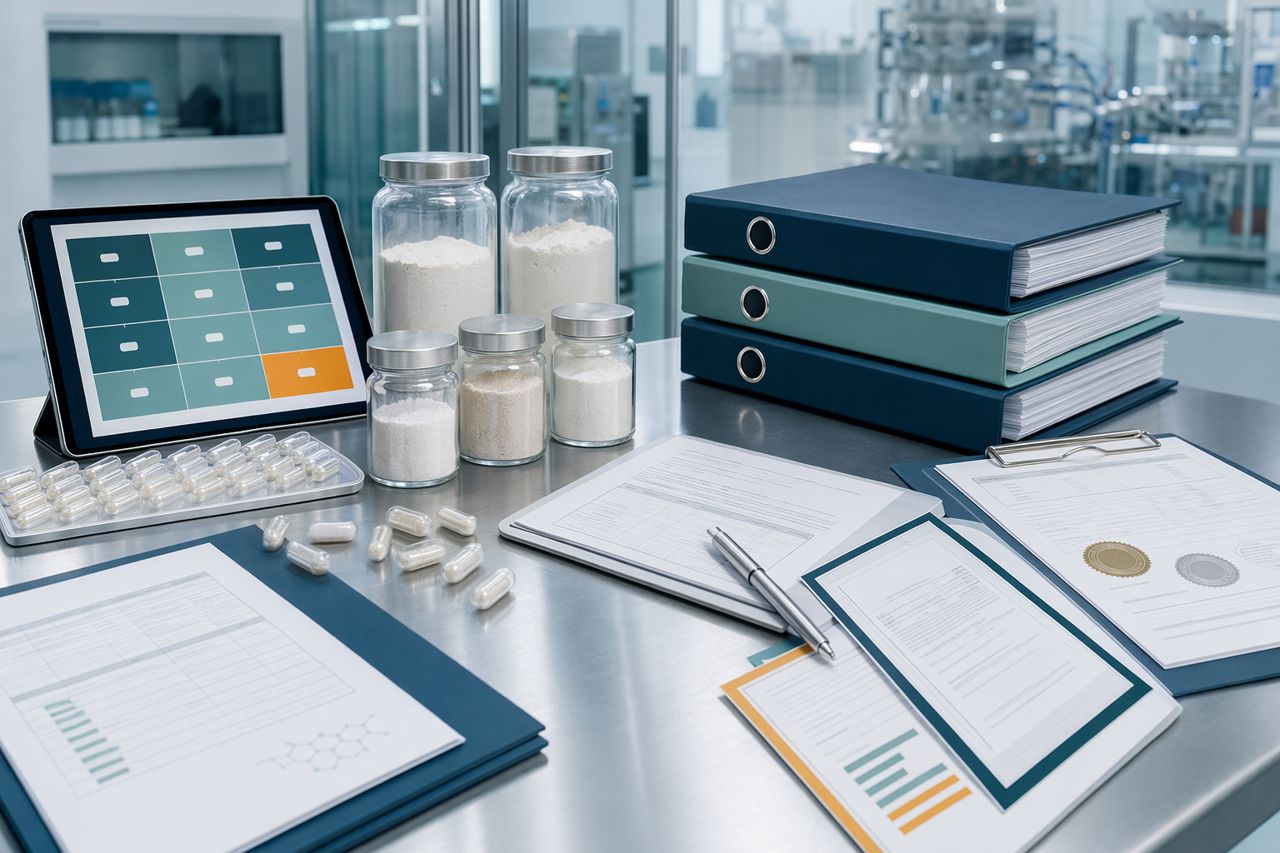
A strong enzyme raw material package should be organized around the decisions your team needs to make. For most nutraceutical manufacturers, that includes formulation suitability, quality acceptance, supplier risk, and production readiness.
1. Technical specification sheet
The specification sheet should clearly define the enzyme material in commercial and formulation terms. It should identify the enzyme type or blend profile, physical form, carrier or excipient system, appearance, solubility considerations where relevant, storage guidance, packaging format, and target specification range.
For formulation managers, this document is often the first filter. It helps determine whether the raw material can work in a capsule blend, compressed format, powder application, or custom digestive enzyme system.
2. Certificate of analysis by lot
The certificate of analysis should connect a specific lot to the agreed specification. For nutraceutical production, the practical value is traceability and lot-level decision support. It should be easy for quality teams to match the lot number, manufacturing date or retest date where provided, microbiological profile, physical attributes, and specification confirmation.
A useful CoA is not just a file for archiving. It is a release tool.
3. Allergen, gluten, vegan, and dietary suitability statements
Digestive enzyme products often sit inside precise market positions. A formula may need to support vegetarian capsules, specific allergen controls, gluten-sensitive positioning, or other dietary requirements. The raw material documentation should make those constraints visible before the formula reaches purchasing.
If a statement is unavailable or conditional, that should be identified early. Late discovery can disrupt label review, customer approvals, or contract manufacturing timelines.
4. Origin and source documentation
Enzyme origin matters for formulation, claims review, customer expectations, and internal sourcing policies. Documentation should clarify microbial, plant, fungal, or animal-derived source status as applicable, along with country-of-origin information where available.
For multi-enzyme blends, the workflow should capture source information by component, not only at the finished blend level. This creates a more complete technical record and reduces back-and-forth during customer file requests.
5. Safety data and handling guidance
Powder handling matters in production environments. Safety documentation should support receiving, storage, weighing, blending, and cleanup procedures. Teams should understand whether the material requires dust control, respiratory precautions, moisture protection, dedicated handling steps, or special spill response.
This is where documentation becomes operational. It helps protect process consistency as well as personnel workflow.
6. Traceability and change-control records
A qualified enzyme supplier should be able to support lot traceability and communicate meaningful changes. Change-control expectations may include changes to source organism, production site, carrier system, processing aid, packaging, specification, or documentation format.
For manufacturers running repeat orders, this is critical. A small raw material change can create downstream questions in blending behavior, label review, customer approval, and finished product consistency.
Building the workflow before the first purchase order
The best documentation process starts before procurement. If quality documentation is requested only after the purchase order is placed, the project is already exposed to delay.
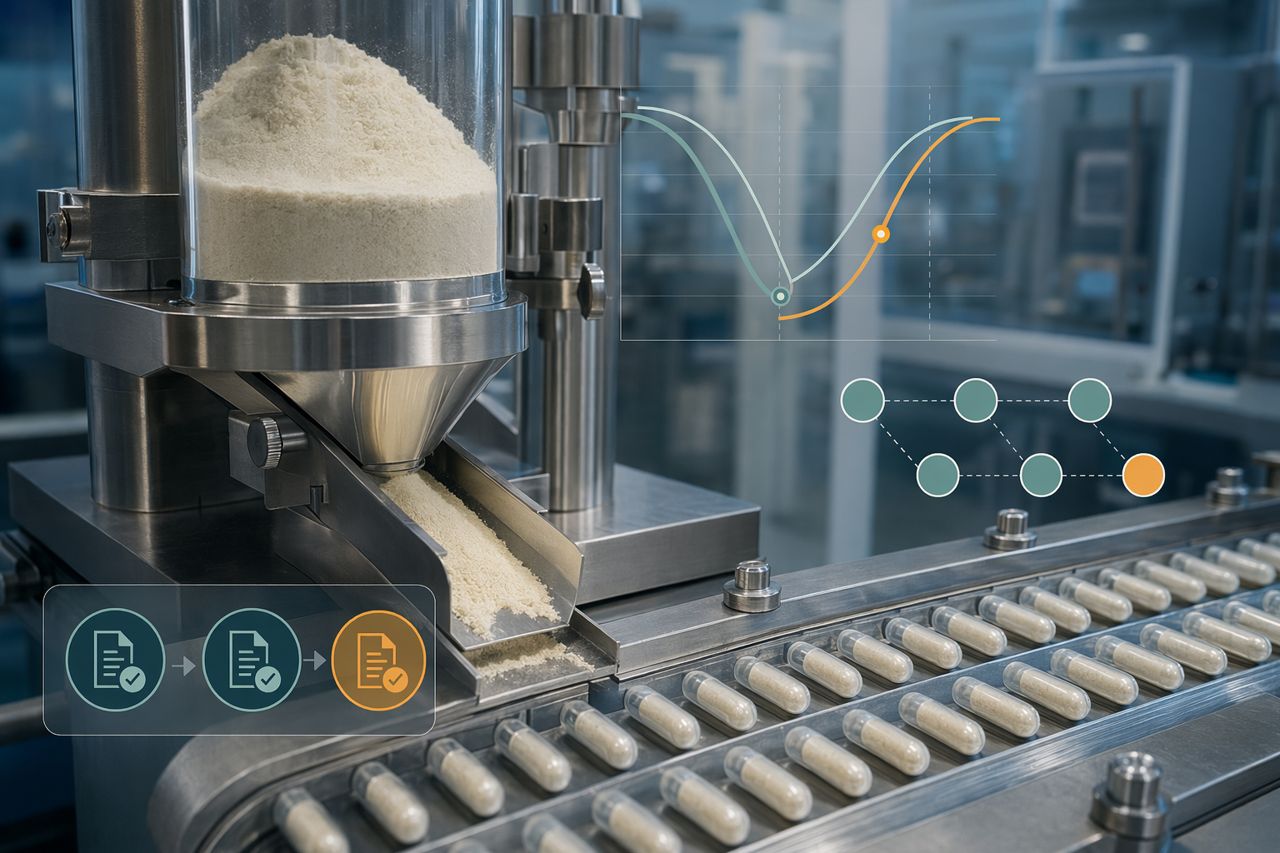
A clean workflow usually follows this sequence:
- Define the formula target, dosage format, and finished product positioning.
- Identify the enzyme type, blend architecture, and excipient constraints.
- Request the technical file before commercial commitment.
- Review source, suitability, storage, and handling requirements.
- Align internal quality expectations with supplier documentation.
- Confirm lot-level release documents before shipment.
- Archive the approved document set for repeat purchasing and audits.
This creates a single source of truth for formulation, quality, and purchasing.
Documentation considerations for multi-enzyme blends
Multi-enzyme systems are common in digestive supplement manufacturing, but they can complicate raw material files. A blend may contain protease, amylase, lipase, cellulase, lactase, and other enzyme types, each with its own sourcing and handling considerations.
For these projects, documentation should not stop at the blend name. The internal file should capture:
- Component-level enzyme profile
- Carrier and flow-agent compatibility
- Capsule or tablet processing considerations
- Moisture and temperature sensitivity
- Ingredient source status by component where available
- Supplier change-control expectations
- Lot-level release documents for the finished blend
This level of organization helps contract manufacturers and brand teams evaluate the blend without rebuilding the technical file each time.
Incoming inspection: turning documents into release decisions
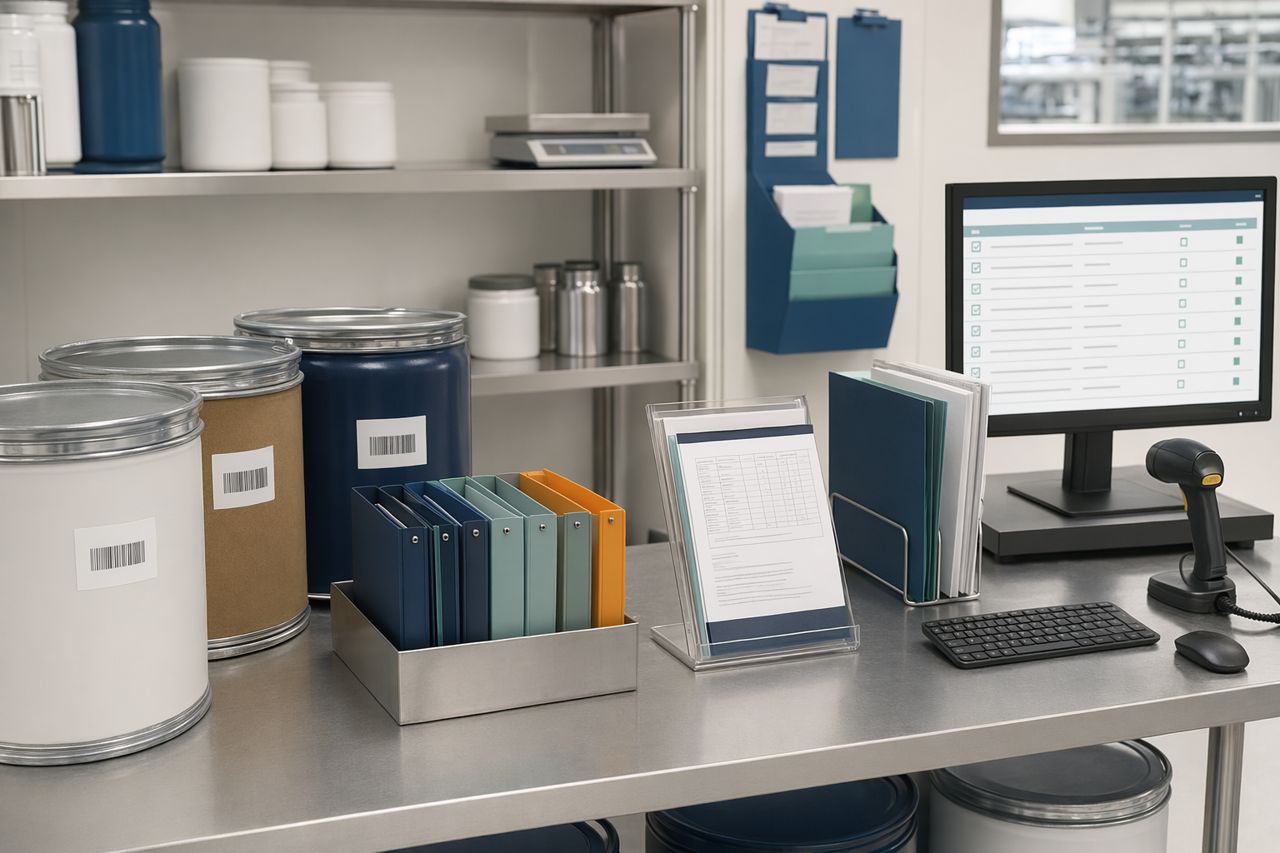
Incoming inspection should be supported by documents that are complete, current, and easy to compare against the approved specification. When the document set is inconsistent, quality teams spend time reconciling names, dates, lot identifiers, specification language, and supplier statements.
For enzyme raw materials, an effective incoming review should confirm:
- The received lot matches the purchase order and approved material name
- The CoA matches the approved specification
- Packaging is intact and appropriate for moisture control
- Storage conditions are clear and operationally realistic
- Retest or expiry information is available where required
- Any supplier notifications have been reviewed before release
This is where a formulation-led document package pays off. The team can release or quarantine based on organized information, not supplier follow-up emails.
Scale-up: keeping the document set stable as volume grows
Pilot lots often move faster than commercial lots. Early samples may be reviewed informally, while commercial production requires a tighter document trail. The risk is that the sample approved by formulation does not map cleanly to the raw material file required by quality.
Enzymeslink helps manufacturers avoid that gap by aligning sample documentation, quote-stage specifications, and commercial lot files before scale-up. This supports a smoother transition from benchtop evaluation to batch production.
For repeat orders, the same structure helps purchasing confirm that the material being reordered is technically consistent with the approved version.
Common documentation gaps that slow enzyme projects
The most frequent issues are not dramatic. They are usually small inconsistencies that create avoidable review cycles.
Common gaps include:
- Specification sheets that do not match the commercial material name
- CoAs that omit clear lot identifiers or current dates
- Allergen statements that do not reflect the finished product market position
- Source documentation that is incomplete for blended materials
- Storage guidance that is too generic for enzyme powders
- Change-control expectations that are not defined before reorder
- Supplier files that are split across multiple outdated versions
Each gap adds friction. In a contract manufacturing environment, that friction can delay line scheduling, customer approvals, or finished goods release.
How Enzymeslink supports quality documentation
Enzymeslink works with dietary supplement manufacturers that need enzyme raw materials to fit both the formula and the production system. Our support is built around practical B2B requirements: documentation readiness, sourcing consistency, blend compatibility, dosage-format planning, and scale-up communication.
For digestive enzyme projects, we can help align:
- Single-enzyme and multi-enzyme raw material options
- Capsules, tablets, powders, sachets, and custom blend formats
- Supplier documentation packages for quality review
- Lot-level release documentation for purchasing and receiving
- Source, allergen, and suitability statements
- Storage, handling, and packaging expectations
- Repeat-order consistency and change-control communication
The result is a cleaner qualification path from initial formula review to commercial production.
Request a quote for enzyme raw materials
If your team is qualifying bulk digestive enzymes, building a multi-enzyme blend, or tightening documentation around an existing supplement formula, Enzymeslink can help prepare a quote around your technical requirements.
Include the enzyme profile, intended dosage format, target order volume, documentation needs, and any label or sourcing constraints. Our team will review the request and respond with a formulation-led sourcing path.